
Everything in your directory is more than a spot on the tree. Each site, area or asset has its own page, where the entries logged against it and the content built for it live. Selecting it in the tree shows you where it sits; opening it takes you to that page.
Selecting vs opening
Open the Directory page from Directory in the top navigation. There you can look at your directory as a tree, a sunburst or a list — and in each of them, selecting something and opening it do two different things.
Selecting keeps you in the view. Click a card once and it is highlighted, with the view settling on it, so you can see where it sits and act on it — add a child or change its details — without leaving the map. Use selection to find your way around the structure.
Opening leaves that view and takes you to the item's own page. You open it from its actions menu — the same menu you use to add or edit. The page is where its entries and widgets live, and where you spend most of your time once you have found what you want. The tree view and list view each describe how to reach that menu.
An item's pages
When you open something in the directory, you land on its page. Its name sits at the top as the heading — Fairview Operations Group in the example below — and everything it holds is laid out beneath it.
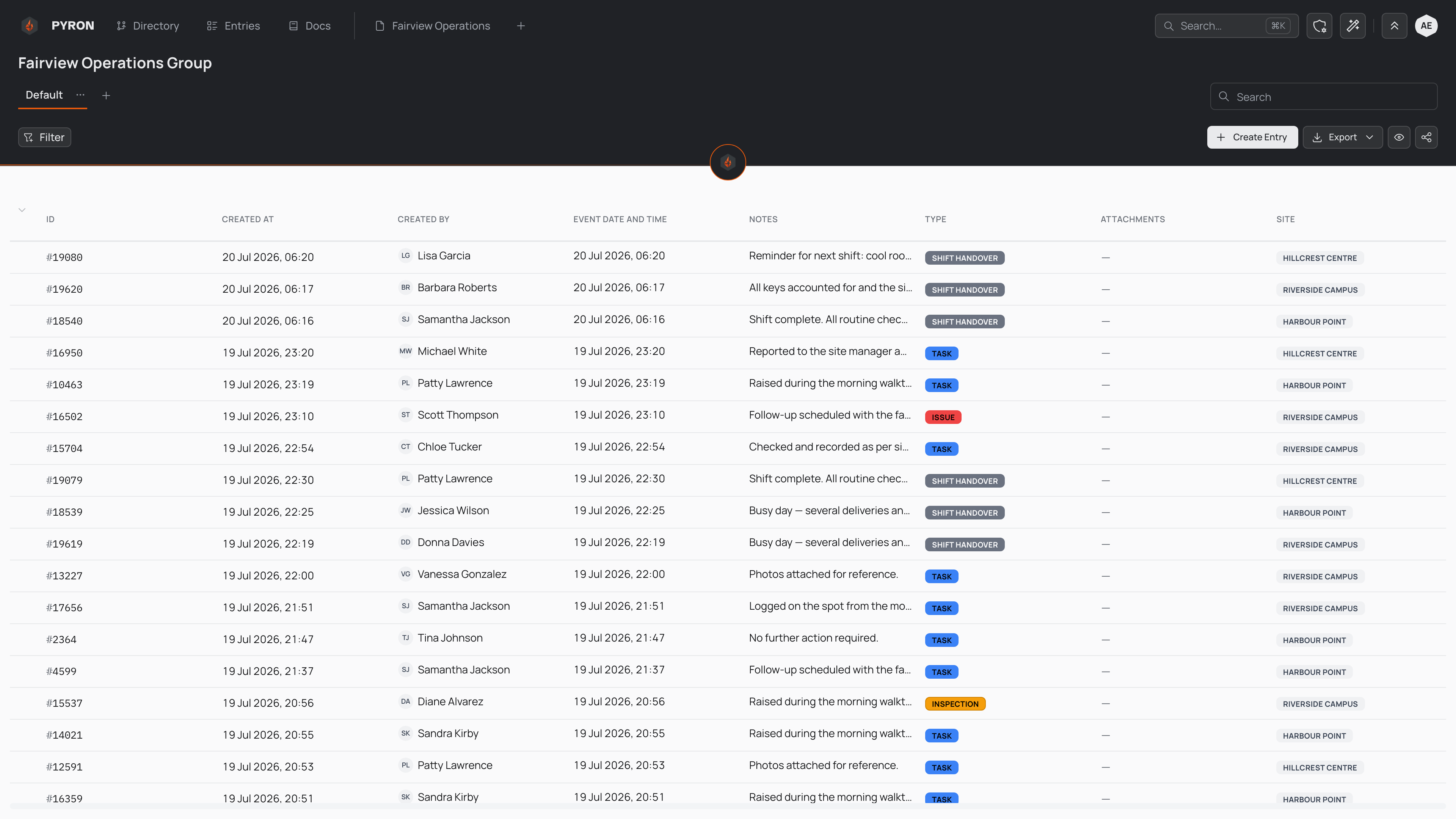
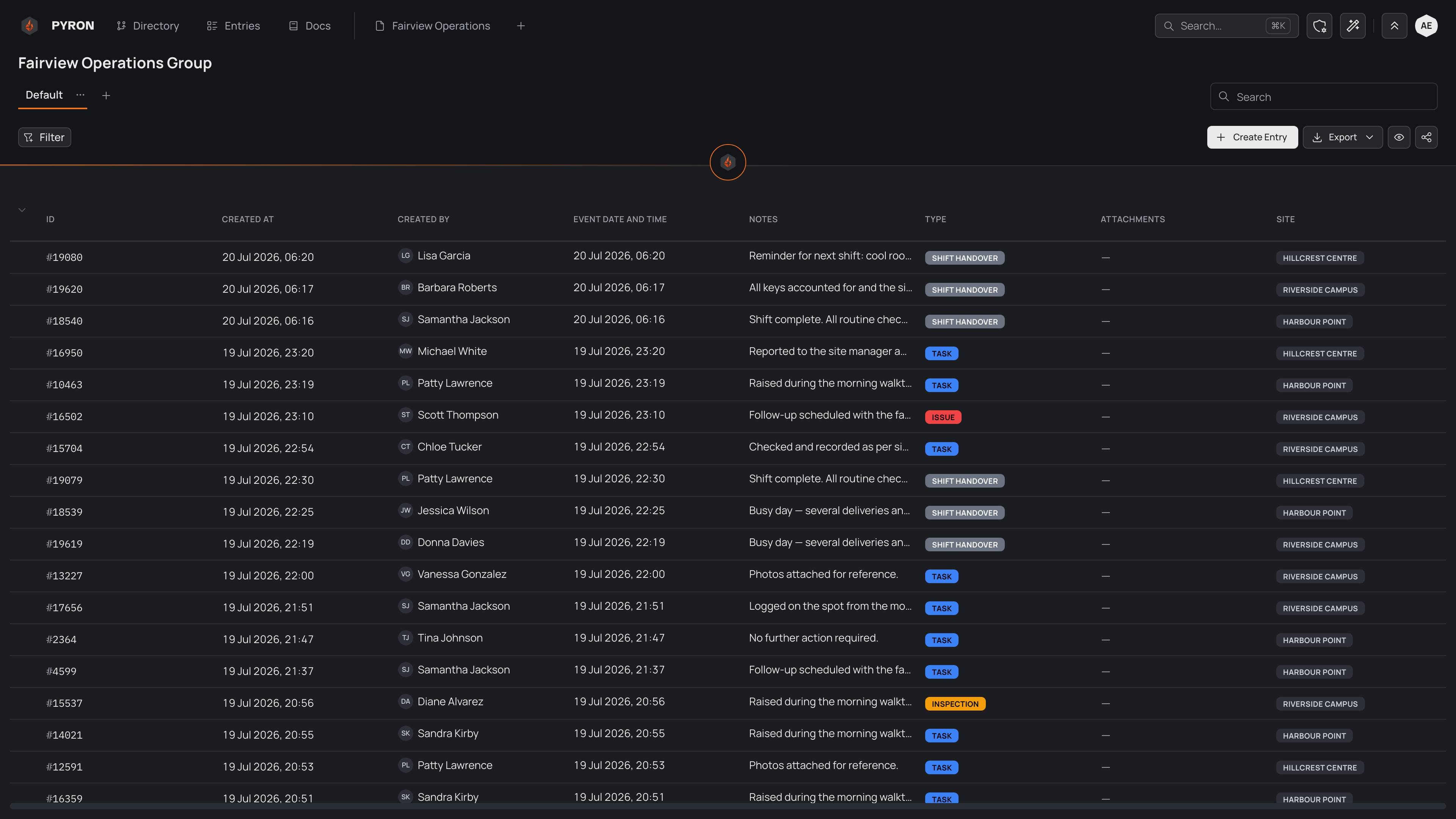
Content is organised into pages, each shown as a tab across the top. Everything starts with one, labelled Default. Select Create Table to add another, and Default tab actions to rename or manage the tab you are on. Splitting content across pages keeps a busy site or asset readable — one page for a table of entries, another for a dashboard.
Each page is filled with widgets, the building blocks that show and collect the data. On this page, the Default tab holds a table of the entries logged here. Every row is one entry, with columns such as ID, CREATED AT, CREATED BY, TYPE and SITE.
The controls above the table act on those entries:
- Create Entry logs a new entry here.
- The search field and Filter narrow the list to the entries you want.
- Show/Hide Columns chooses which columns appear, and Export downloads the table.
- Share form link hands out a link for logging entries without signing in.
For more on building and arranging these pages, see directory pages. To work with the entries themselves, see viewing entries and creating an entry.
The breadcrumb trail
Above the heading runs a trail of links — the parents that sit above the page you have open, from its parent up towards the top of the tree. It shows where this item lives in the structure at a glance.
In the example, the parent, Fairview Operations, appears as a link, with the open item, Fairview Operations Group, named in the heading just below it.
Each link in the trail jumps straight to that page, moving up the tree without returning to the Directory view. Because the trail spells out the parents, it also tells two same-named things apart, so you can see which branch you are on. To read more about how the directory nests, see the directory.