
The Entries screen gathers everything your team has logged into one place: a stream of entries down one side and a detail pane beside it that fills in when you pick one out. From there you read a single entry in full, follow how it has changed, and move on to the next without losing your place in the stream.
The entries screen
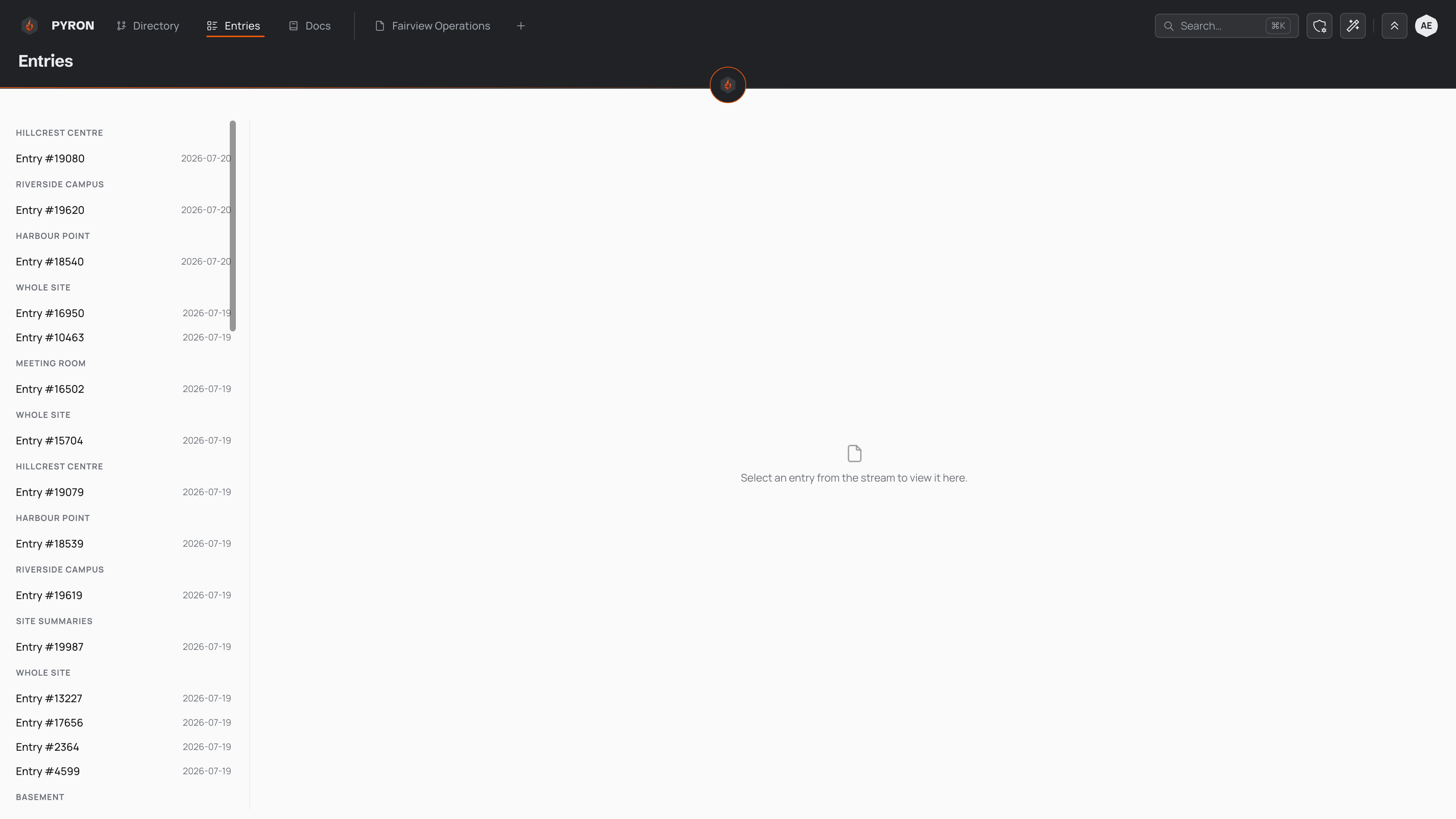
You reach the Entries screen from Entries in the top navigation. The stream lists what your team has logged, grouped under the place in the directory each entry belongs to — a site, an area, a piece of equipment — with the most recent at the top. Each entry is labelled with its own number and the date it was logged, so you can point to a specific one — Entry #19080, say — without ambiguity.
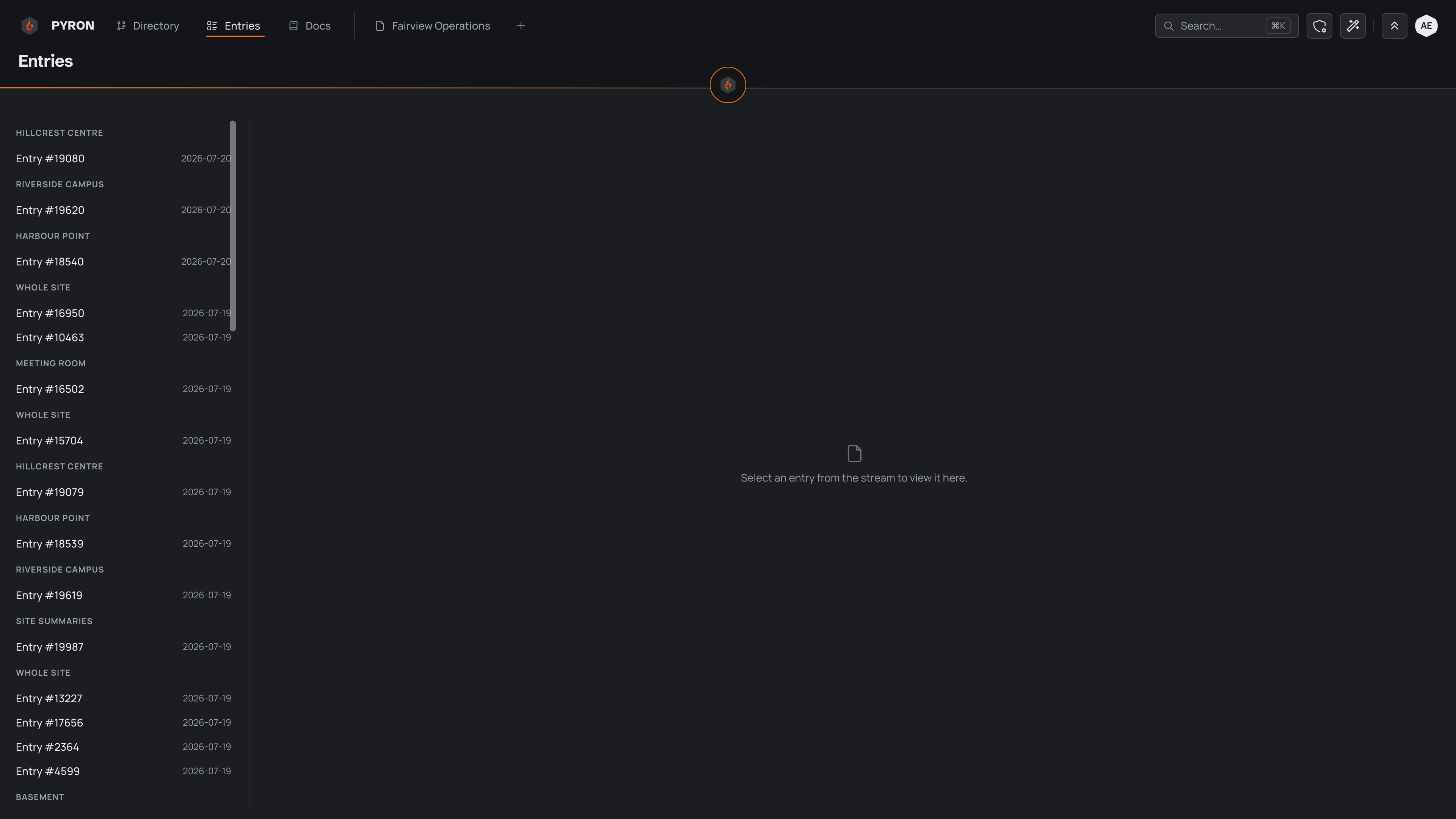
Beside the stream sits the detail pane. Until you choose an entry, it shows a prompt: "Select an entry from the stream to view it here." Choosing an entry replaces that prompt with the entry's full detail, while the stream stays in view alongside it.
When you are after particular entries rather than browsing the whole stream, filtering entries narrows the list down to what you need.
Opening an entry
Select any entry in the stream to open it. Its full detail fills the pane beside the stream, and the entry stays highlighted in the list so you keep your place — choose another and the pane swaps to match. That is how you work through a run of entries without losing your bearings.
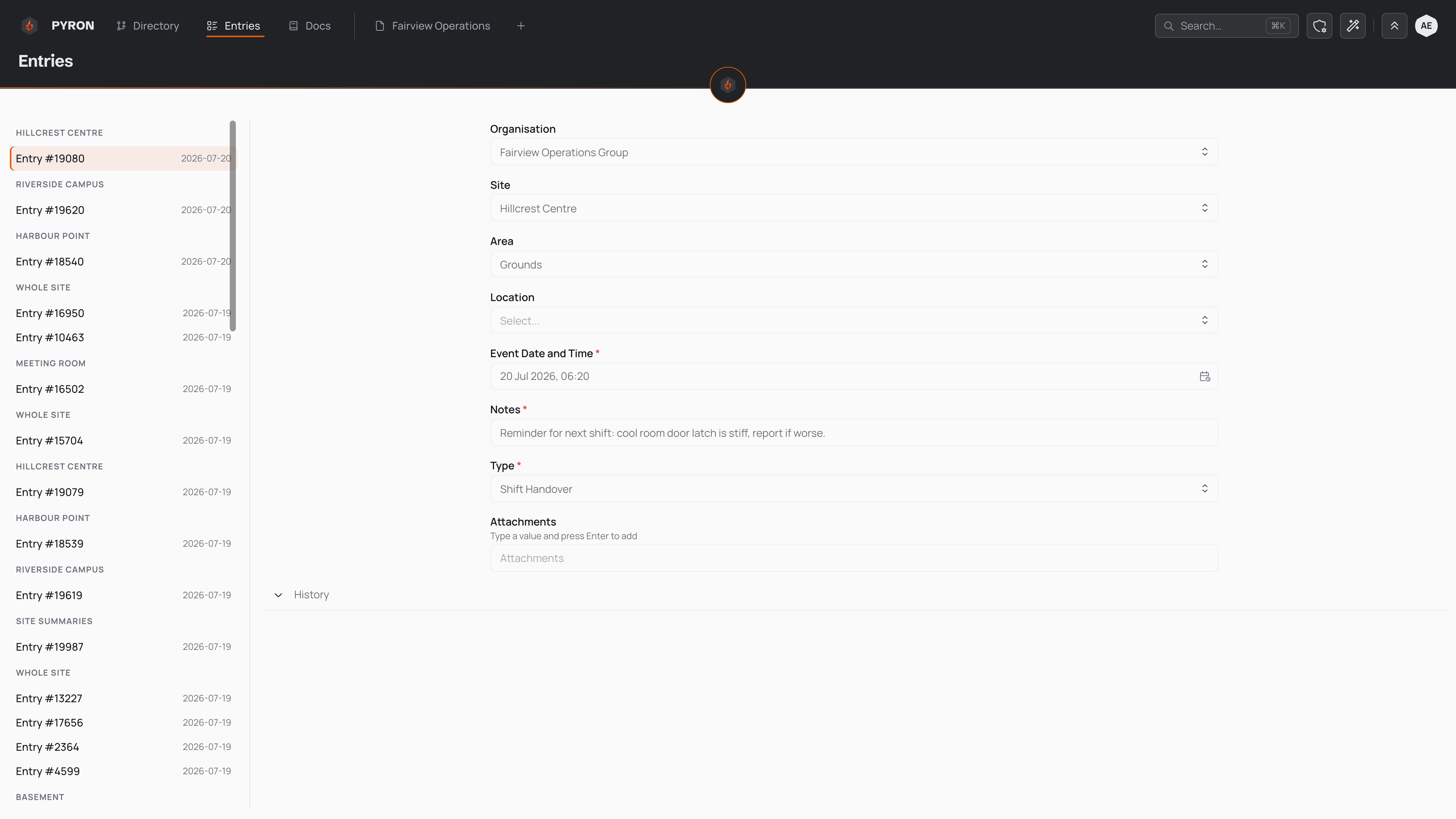
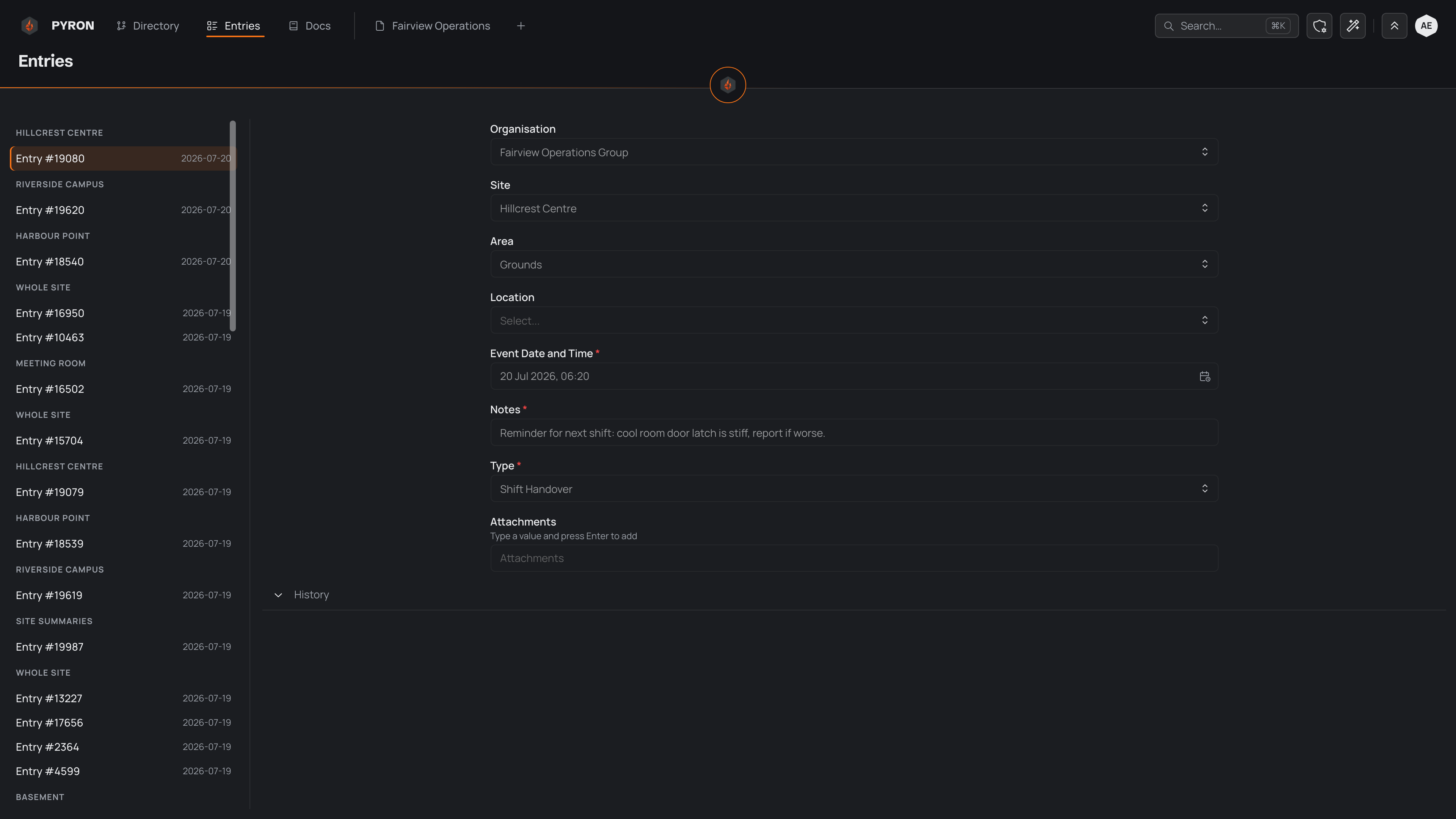
A logged entry lays out what was captured, field by field — where it happened, when, the kind of entry it is, and any notes or attachments — with its history collapsed at the foot of the pane, ready to open when you want to see how it has changed.
What you see depends on the entry. One that is still a draft opens ready for you to keep editing; once it is logged, it opens as a read-only view of exactly what was captured. Logging an entry covers filling one in from start to finish, and editing an entry covers reopening a draft to revise it.
The activity timeline
Opening an entry shows more than its latest values — it also shows what has happened to it. Every change to an entry joins its history: the field that changed, its value before and after, and who made the change and when, each time shown in your own time zone. Nothing is typed over the original, so the timeline stays the full trail of how an entry reached where it is.
For entries that follow a lifecycle, each move from one state to the next joins the same timeline, alongside the edits — so one view tells you both what the entry holds and how it got there. To follow an entry through its states, see status and lifecycles.