
Everything in your directory carries its own page — one place that gathers the entries logged against it and the widgets built to show them. A page is split into tabs, so even a busy site or asset stays readable, and it is ready the first time you open it.
Opening an item's pages
You reach a page by opening the item that owns it. In the tree, sunburst or list view, selecting keeps you on the map, while opening from the actions menu takes you to the page — see opening an item for that distinction.
The page opens on the item's name. In the example below, Fairview Operations Group sits at the top as the heading, with its content laid out beneath it. Everything in the directory has a page waiting, so there is no separate step to create one.
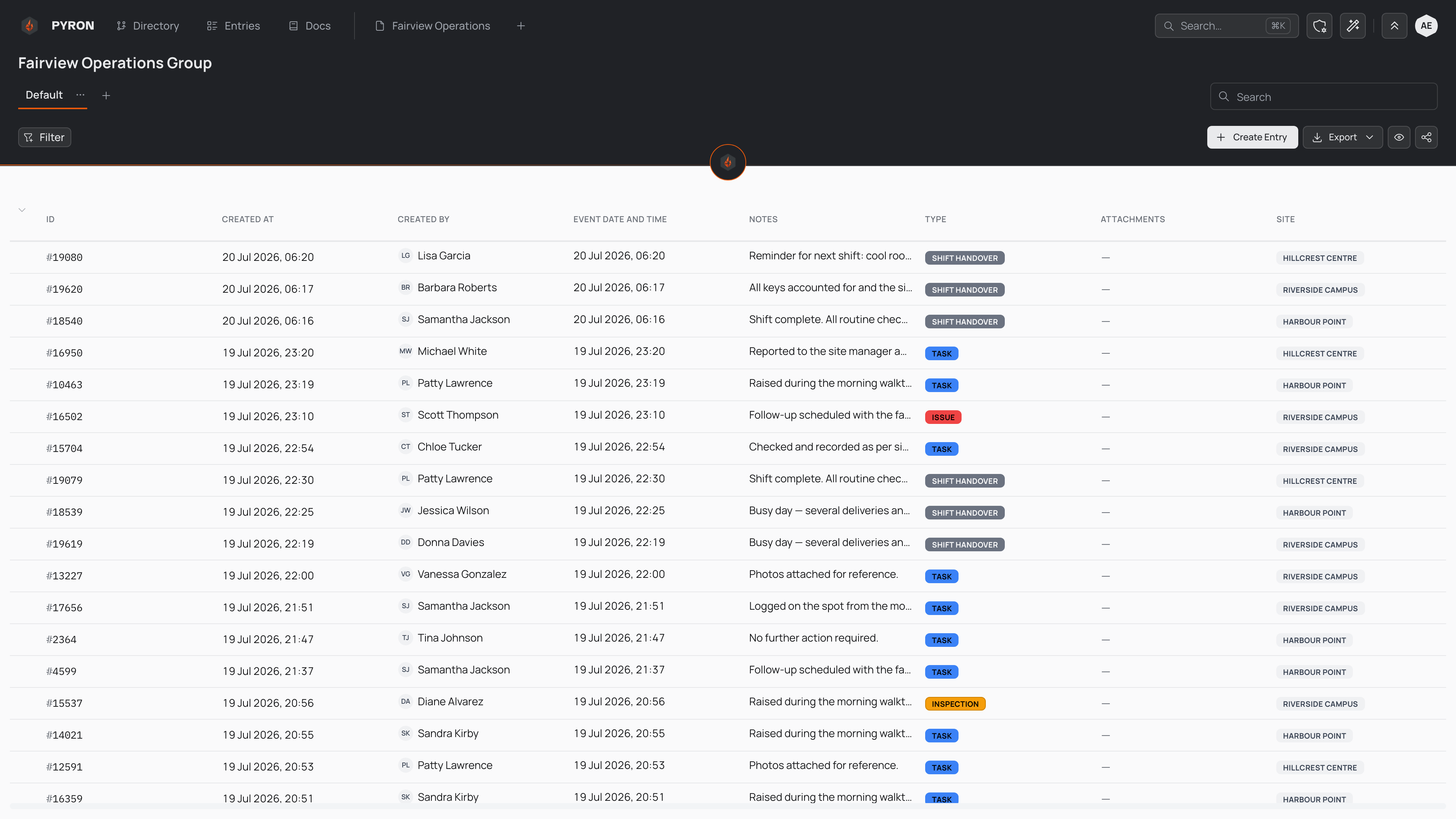
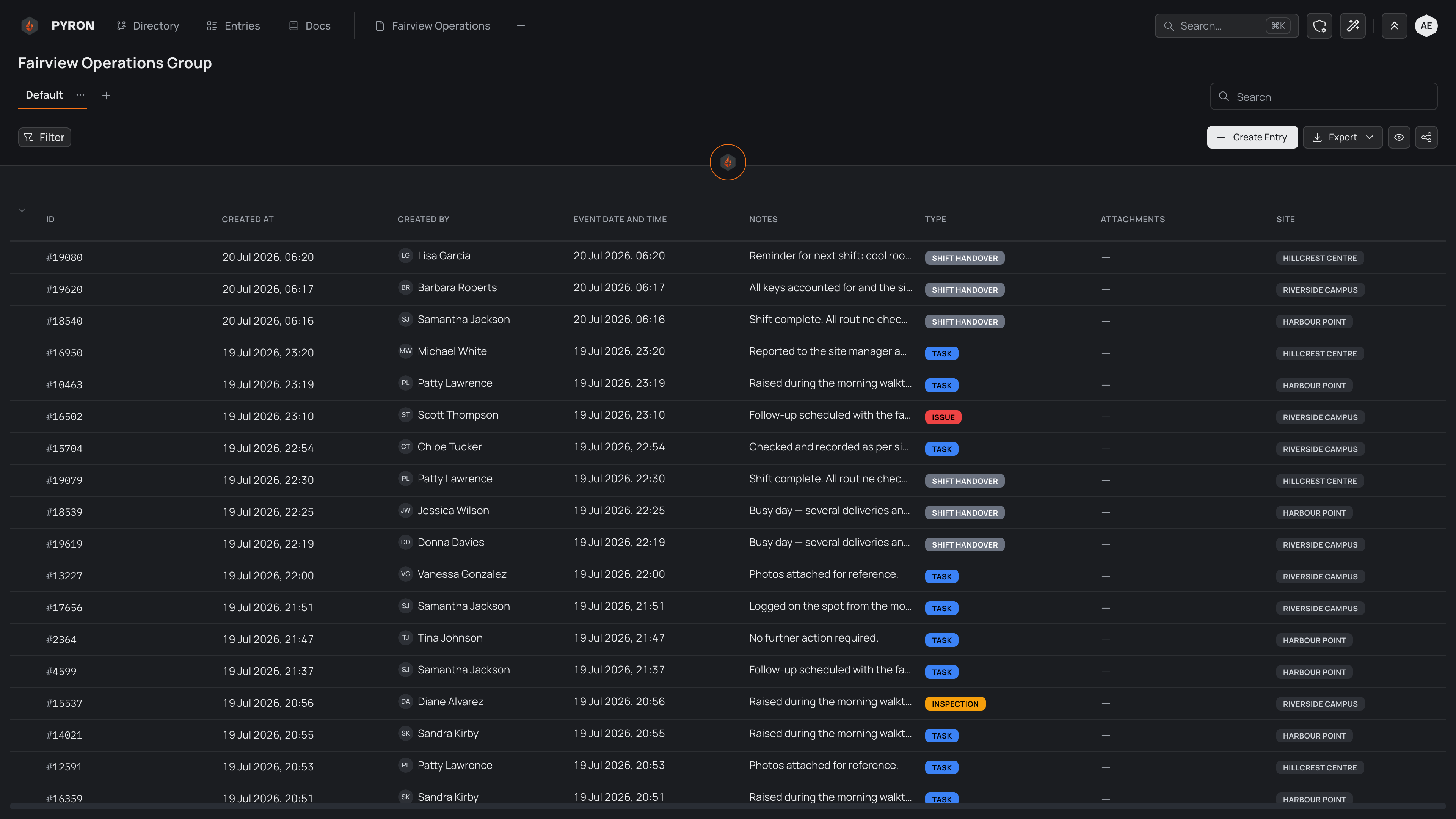
What fills the page is a set of widgets — the tables, charts, tiles and forms that show and collect the data. Pages, tabs and widgets explains how those pieces fit together, and entries covers the data a table lists.
Tabs
Content is spread across tabs, each a labelled section running along the top of the page. Everything starts with a single tab named Default, and opening the page lands you on it. Selecting another tab swaps what you see — its own layout of widgets — without leaving the page.
If you can edit here, the tab strip gives you controls for shaping the set:
- Select Create Table at the end of the strip to add a tab. It opens ready with a table of the entries logged here, so a second view is a click away.
- Open a tab's actions menu — Default tab actions on the Default tab — to rename, duplicate or remove that tab. The first tab is the default and stays put; it cannot be removed.
- Double-click a tab's name to rename it in place.
Each tab holds its widgets on a grid — tables, charts, forms and canvases side by side. To keep a view of your own that no one else sees, build a personal page instead.