
A portal is one shared account for a device that a whole team uses — a tablet by the loading dock, a screen in the security room. The team signs the device in once; from then on each person steps up, picks their name, and logs their work as themselves. You create and manage portals from Setup.
The portals list
The portals list sits under Setup and shows every shared account you have set up.
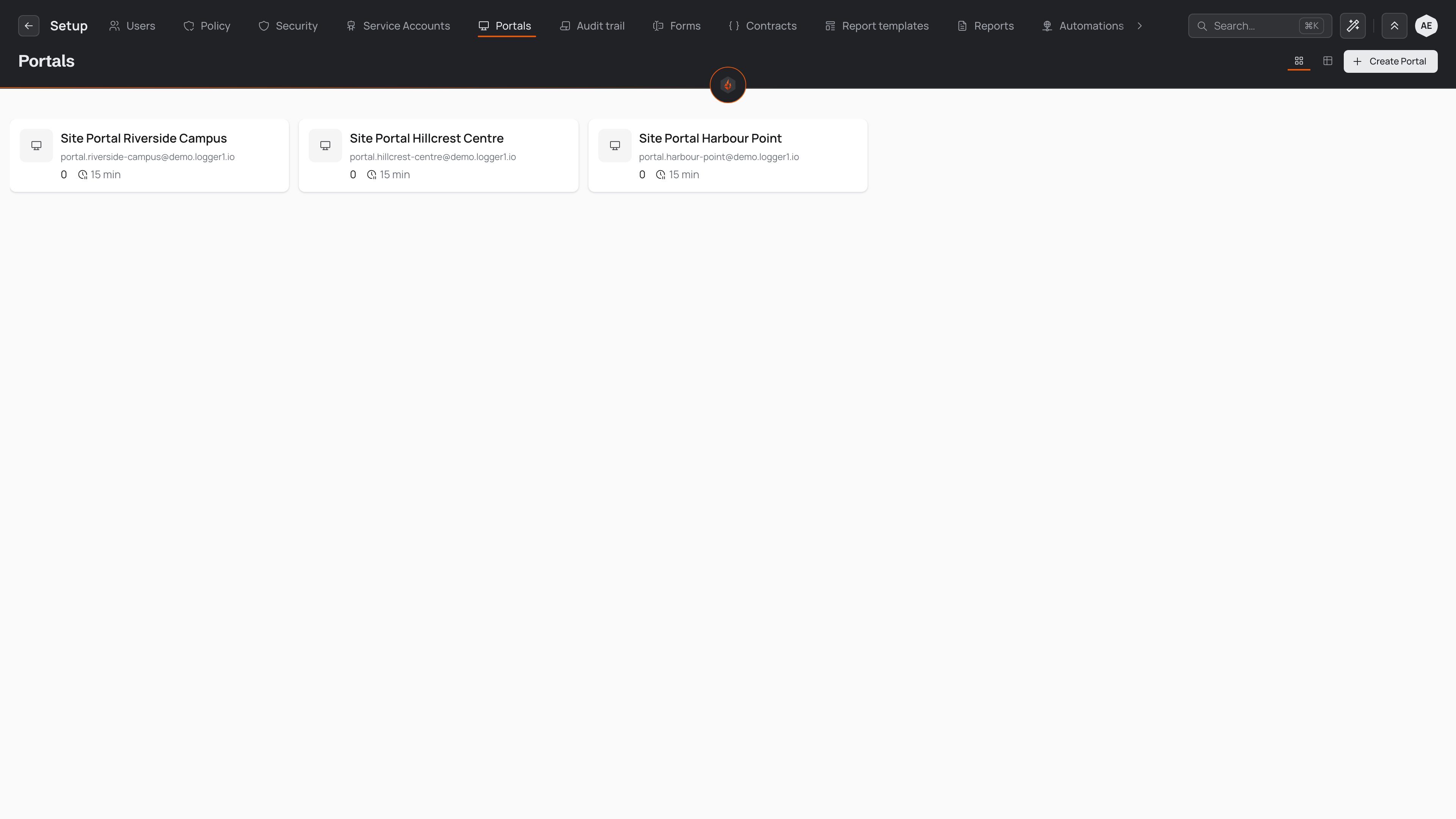
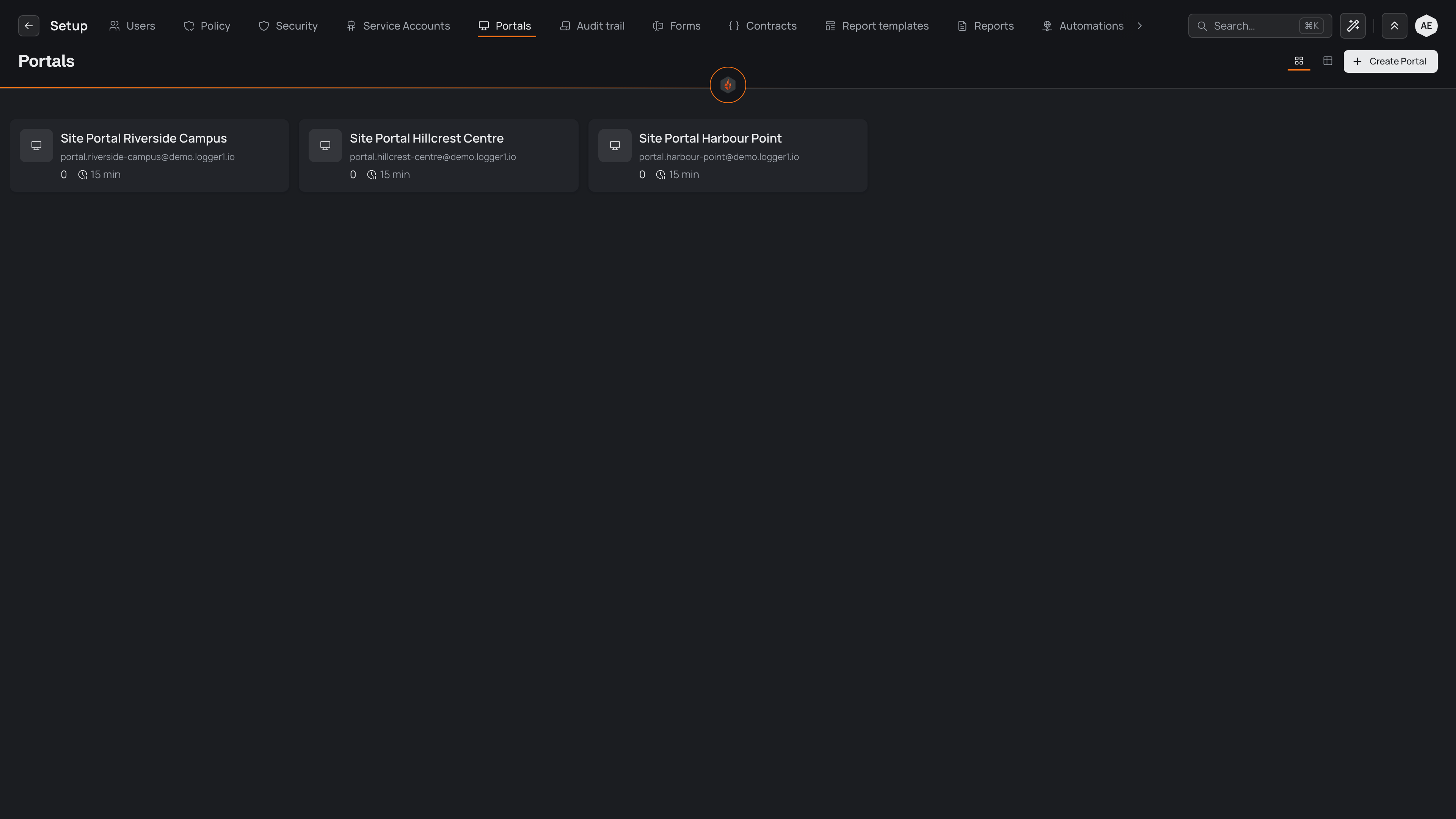
You can read the list as tiles or as a grid, using Card view and Table view. Either way, each portal shows its display name, the sign-in address it uses, how many people are registered to it, and how long it waits, when idle, before it signs itself out, in minutes.
Two actions sit on each portal: Set password changes the password the device signs in with, and Delete portal removes it. Above the list, Create Portal adds a new one.
The registered-user count shows how many people have joined that portal. When a portal has people registered to it, you can open the list to see who they are.
Creating a portal
- Choose Create Portal.
- Enter the username and password the device signs in with. The username is email-shaped, and it is the sign-in address shown on the portal's tile.
- Give the portal a display name and pick an icon. This is what people see on the tile here and on the chooser at the device.
- Set an inactivity timeout in minutes — how long the device waits, untouched, before it returns to the chooser and hands the session back.
- Choose a page for the device to open after someone enters their PIN. A device that only ever does one job — a table to log against, or a team dashboard — opens ready for it. This step is optional.
- Save the portal, and it appears in the list.
The timeout matters because a shared device should not stay open under one person's account after they walk away. When it lapses, the device drops back to the chooser so the next person signs in as themselves.
Portal users act as themselves
A portal keeps sign-in quick without hiding who did what. The first time someone uses a portal, they confirm who they are with their own password and choose a six-digit PIN. After that, they pick their name at the device and enter the PIN — no password at the start of every shift.
From that point the app acts as that person: every page they open and every entry they log is filed under their own account, and they see exactly what their own roles allow. The shared device neither widens nor narrows what a person can reach.
Set password on the list changes the portal account's own credentials — the ones the device signs in with. A person's PIN is separate: each person sets and resets their own PIN at the device, using their password to confirm who they are.
The portal walks through what this looks like from the field — the chooser, the PIN, and handing the device back. For how a portal compares with the other lightweight way to log away from a desk, see Portals and form links.