
A portal is one shared sign-in for a device a whole team uses — a tablet at the loading dock, a screen in the control room, a terminal by the warehouse door. You sign the device in once, and from then on each person steps up, picks their name, and logs entries as themselves without typing a password at the start of every shift.
Signing in to a portal
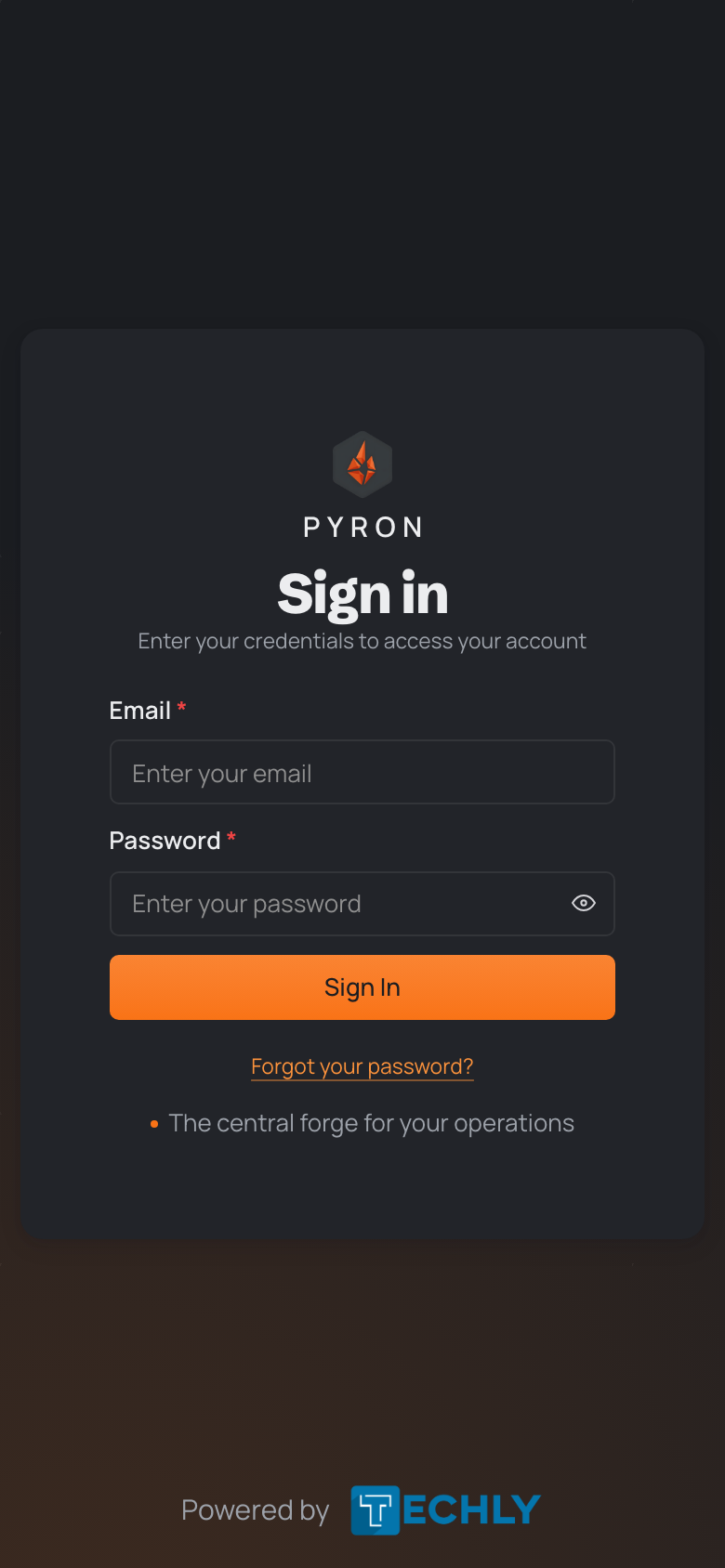
A portal signs in through the same screen you would use for your own account. Enter the portal's email-shaped username in the Email field, its password in the Password field, and choose Sign In.
Instead of the ordinary app, the portal opens its own screen: a chooser listing the people registered to that device. This is the resting state the device sits at between shifts, and it stays signed in, so the next person does not re-enter the portal's password.
If the device is left untouched for a while, the portal returns to this chooser on its own. That way the next person starts from a clean screen rather than picking up where someone else left off. An administrator decides how long the device waits before it does this; see Portals for how a portal is set up.
Acting as yourself
From the chooser, tap your name and enter your six-digit PIN. From that moment the app acts as you: every page you open and every entry you log is filed under your own account, not the shared device. You see exactly what your own roles allow — the shared device neither widens nor narrows what you can reach.
The first time you join a portal, you confirm who you are with your password and choose the six-digit PIN you will use afterwards. Once that is set, the PIN alone steps you up to the device — there is no need to enter your password again on later shifts.
A bar along the bottom of the screen shows whose account is in use while you work. When you finish, use it to hand the device back to the chooser, so the next person signs in as themselves rather than inheriting your session.
Logging entries
Once you are acting as yourself, you work in the full app exactly as you would signed in on your own device. Open the pages you have access to and log entries the usual way; each one lands under your account and against the form it belongs to.
A portal can be set up to drop you straight onto one page after you enter your PIN — a table to log against, or the dashboard your team works from — so a device that only ever does one job opens ready for it. Whether a portal does this, and which page it lands on, is part of how an administrator sets it up.
When your turn at the device is over, hand it back to the chooser so the next person starts fresh. A portal is one of two lighter ways to log entries away from your own desk; a form link hands a single form to one person instead of sharing a whole device. Portals and form links compares the two, and Form links covers the other path.