
Press ⌘K from anywhere in Pyron to open a single search box that looks across your directory, entries and pages at once. It groups the matches by kind and takes you straight to the one you pick, so you can reach a named entry or page without walking the tree.
Opening search
The search box is available on every screen — you never have to be on a particular page to reach it.
- Press ⌘K (or Ctrl+K on Windows and Linux) to open the search palette over whatever you are looking at.
- Or select Search in the header at the top of the screen.
- Start typing. Matches appear as you type.
Results at a glance
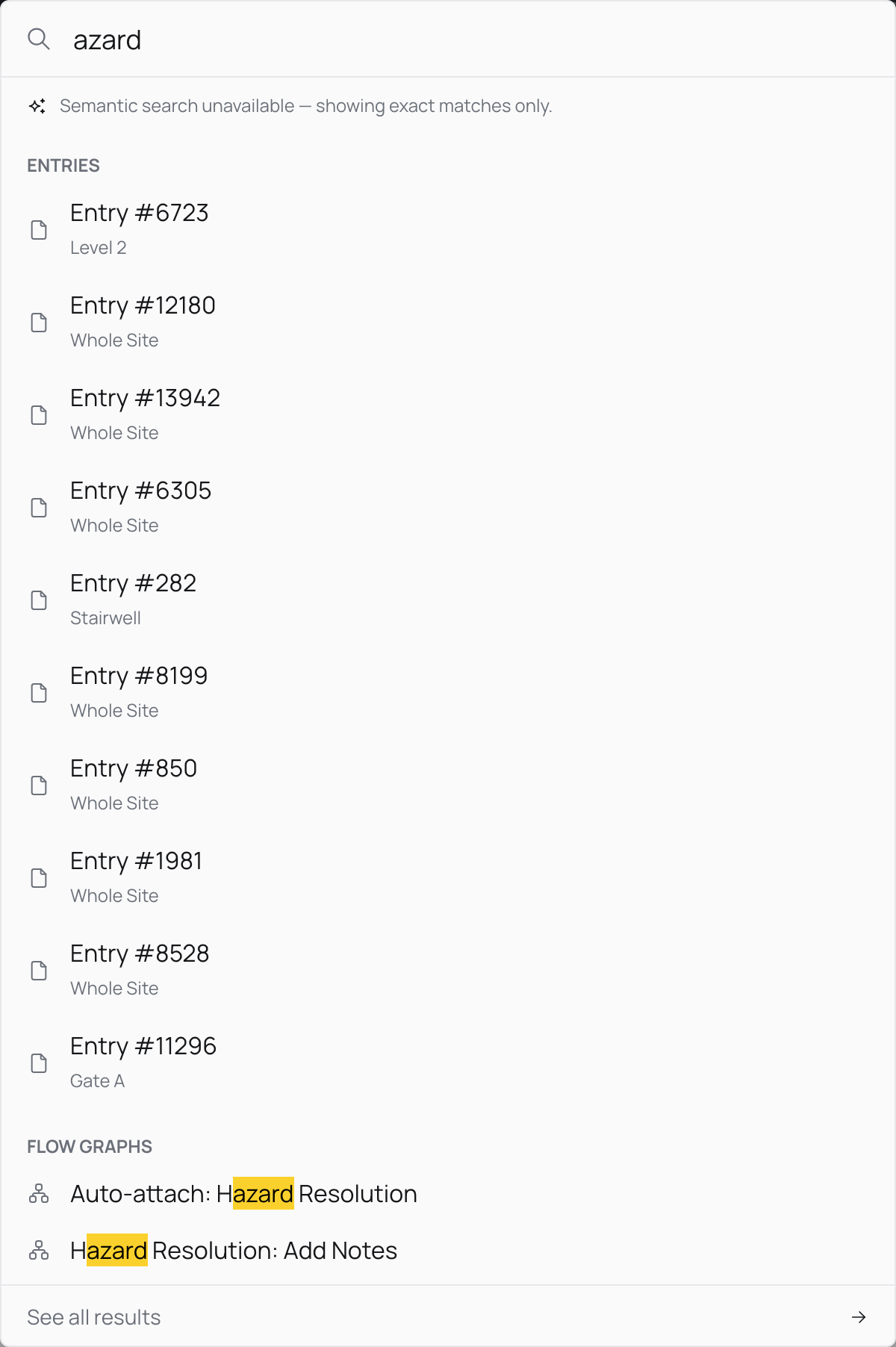
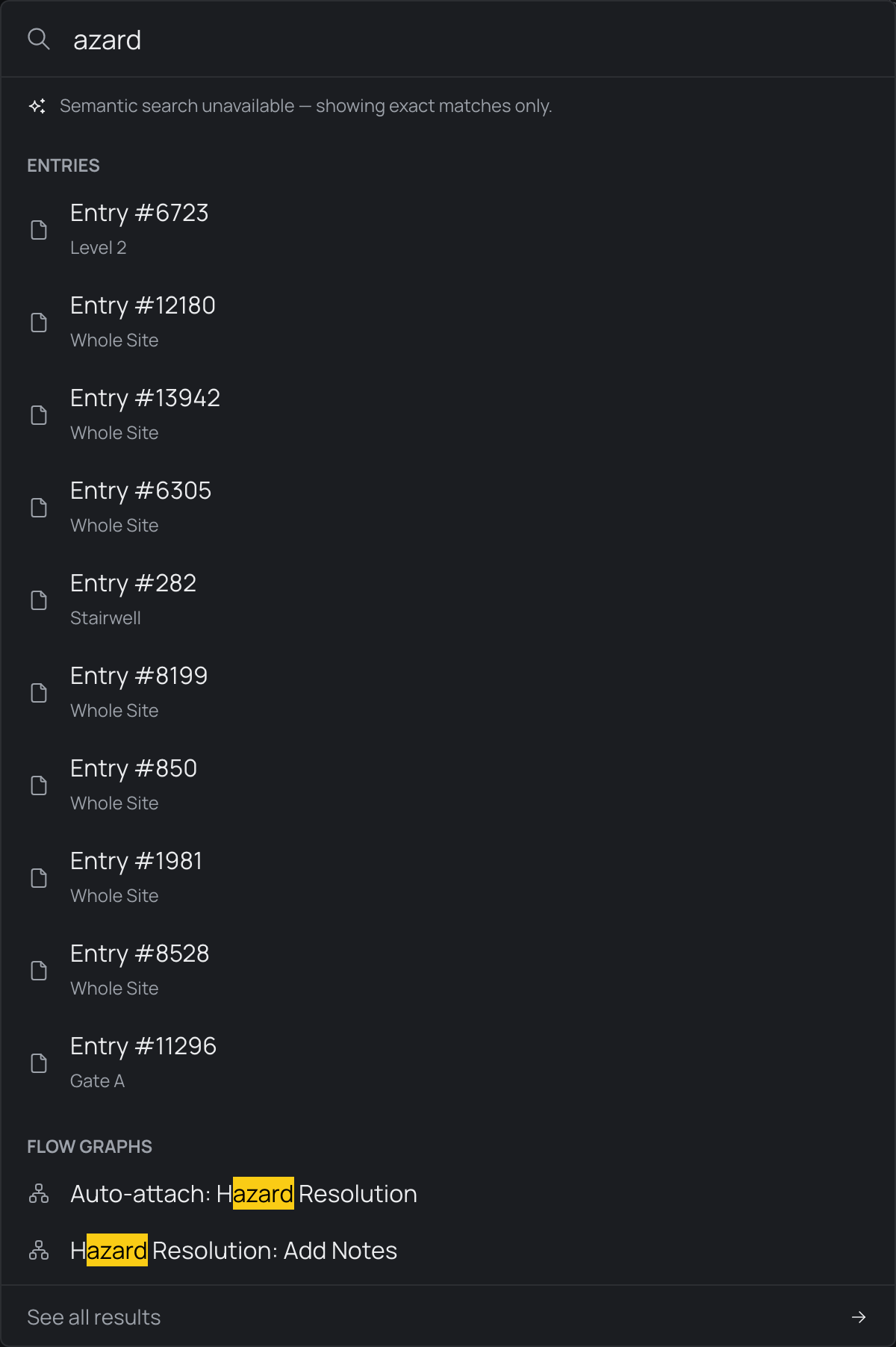
As you type, Pyron sorts the matches into labelled groups so you can tell what kind of thing each result is. Search for a word such as hazard and the matches split apart the moment you type.
You see a group for each kind of match:
- Entries — matching entries, each shown with a snippet of its contents (or its entry number) and where it is filed.
- Directory — places and things in your directory, such as a site, a register or an asset.
- Pages — the dashboards and pages you can open.
- Form templates and flow graphs — the building blocks behind your forms and automations, shown when you have access to them.
Every search covers the exact words an entry contains. If your organisation has also set up meaning-based search, entries are matched by what they are about, not only by the words you typed. When that is switched off, a line reads "Semantic search unavailable — showing exact matches only." so you know the search compared exact words rather than meaning. See Search by meaning for how the two work together.
Open a result to jump to it. Opening an entry takes you to the Entries page with that entry selected; opening anything else takes you to it. You only ever see things you are allowed to open, so two people searching the same words can get different results depending on which parts of the directory they can reach.
The full results page
The palette keeps its list short. Whenever a search finds matches, a See all results action sits at the foot of the palette.
Select it to open the full results page, which lays out the same groups with room to scroll. A search box stays at the top so you can adjust your wording without starting over, and the page's web address updates as you search — copy it from the address bar to send someone the exact same search.